

 Previous
Let’s talk charisma—the crown jewel of public speaking, captivating audiences worldwide with every word, gesture, and pause. Whether it is someone presenting a TED Talk or speaking during a meeting at work, we know it when we see it: That person has the “It Factor,” and we can’t help but be drawn in.
Who doesn’t want some of that?
Here’s the good news: Like many sought-after speaking traits, you don’t have to be born with it. Charisma isn’t magic; it’s a skill you can practice, refine, and develop.
What Is Charisma?
I’ll admit, this question stopped me in my tracks. As a vocal coach, my instinct would be to default to video examples (Oprah, Steve Jobs, Simon Sinek), maybe toss in a mention of the “It Factor,” and call it a day. But to explain it properly, I dug into the research.
Here’s the consensus: Charisma is a personal quality; it’s a magnetic charm, attractiveness, or appeal that inspires devotion, loyalty, or influence. Or a more tangible definition: It’s the ability to communicate with energy, clarity, and authenticity so people don’t just hear your message, they feel it.
In other words, charisma is about what others perceive from your internal alignment and energy management—not your actual emotional state.
Charisma isn’t just another word for confidence. Confidence is how you feel about yourself—your sense of competence and self-esteem. Charisma is the effect you have on others: the energy, presence, and connection that draws them in. You can be confident without charisma, and charismatic without confidence (nervous yet magnetic). It’s all about how you connect with the audience.
The Core of Charismatic Speaking
Many experts have found that charisma can be developed by understanding and practicing certain key traits. While their approaches vary, they all share a common foundation.
Chris Anderson, curator of TED Conferences, identifies three qualities that define unforgettable speakers: presence (being fully engaged in the moment), passion (emotional connection), and practice (rehearsal that aligns purpose with expression). Olivia Fox Cabane, author of The Charisma Myth, also highlights three elements of charisma: presence, power (influence), and warmth (goodwill). True charisma, she says, arises when these align, creating trust and impact.
Charisma isn’t magic; it’s a skill you can practice, refine, and develop.
These ideas reflect what sociologists observe in charismatic leaders. Sociologist Max Weber, for instance, notes that leaders’ power comes from combining vision, confidence, and emotional expressiveness—qualities that naturally inspire trust and devotion.
All three frameworks overlap, pointing to three universal elements: presence (being fully engaged in the moment), purpose (passion or vision), and projection (how you express yourself through voice, body, and energy).
How Charisma Takes Shape
The real work of developing charisma happens internally: managing your inner state (presence), connecting to your why (purpose), and intentionally allowing both to shape your voice, body language, and energy (projection). When these align, your audience doesn’t just hear you, they feel you. And that is what makes speaking magnetic, memorable, and charismatic.
Let’s explore how to put this into practice.
Presence
Are you fully present in the moment? Or are you distracted—thinking about your inbox, what others think of you, or the laundry waiting at home? Is a bad mood stealing some of your energy and attention? To connect powerfully, you need to let all of that go and be completely present—with yourself and your audience.
Purpose
Purpose is your “why”—your reason for showing up and speaking. Why this topic? Why now? Why you? It goes deeper than “I have to for work.” It’s more like, “I’m doing this to create a better world for my children,” or something of that magnitude. Connecting to your purpose also helps you stay present. When you’re fully absorbed in that deeper reason, your mental chatter fades, your attention is focused, and your authenticity shines.
Projection
Voice, body language, energy, words—it all matters here. While these often flow naturally when your presence and purpose are aligned, let’s break down the specific attributes that make the biggest impact.
From a voice perspective, research shows charismatic speakers use varied pitch, intentional pauses, strong projection, and few filler words—making them engaging and easy to follow. Build vocal presence through regular warm-ups (breathing, humming, diction drills) and allow your purpose and authentic nature to influence your delivery.
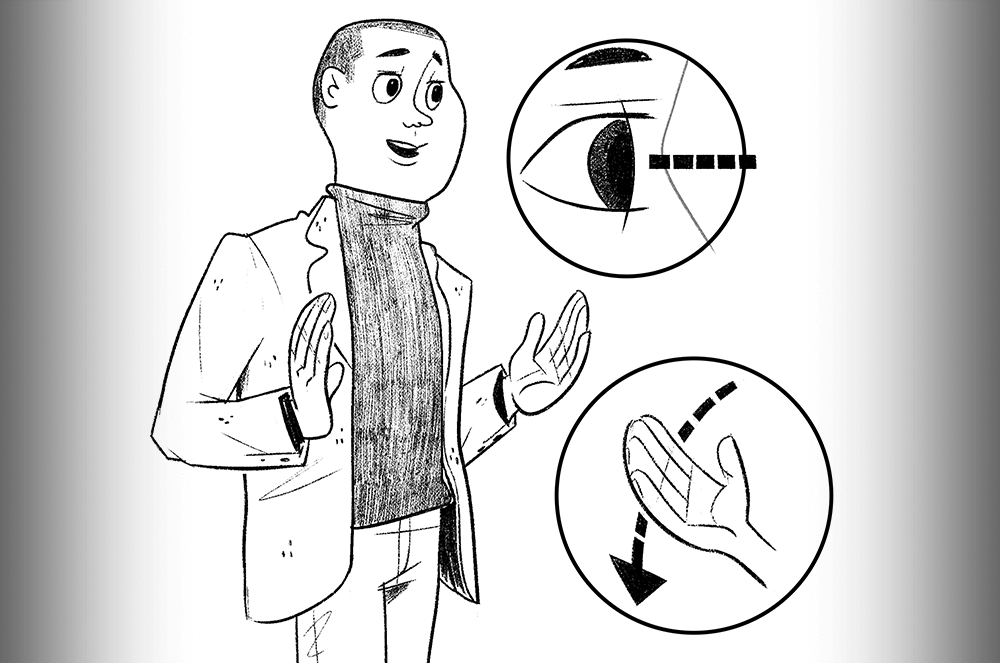
Body language matters just as much. When we’re present and connected to our purpose, our body reflects this. We use open gestures, grounded posture, steady eye contact, and genuine expressions. Avoid fidgeting or overacting—authentic movement builds trust.
Finally, your words shape charisma. Ask questions and use audience-focused, values-based phrasing. Instead of saying, “I’m going to tell you about …,” try “Imagine what could happen if …” or “What might change if we tried …?” Frame ideas around shared ideals like courage, curiosity, or community, and cut extensive self-references or negative phrasing.
How to Keep Building Charisma
Charismatic speakers make audiences feel seen, understood, and fully engaged. And when presence, purpose, and projection align, you do more than convey information; you captivate, inspire, and leave a lasting impression.
To start building your own charisma, record a one-minute talk on a topic you care about. Focus on three things—staying present, speaking with genuine emotion, and allowing your delivery to naturally flow from this place. Watch it back. Notice how changes in voice, gestures, and/or phrasing connect to presence and purpose, and how that affects projection (and audience perception). Repeat this exercise regularly.
Charisma is absolutely a skill you can cultivate. Over time, presence, passion, and projection will become second nature, and that magnetic “It Factor” you admired in others will start appearing in your own speaking.

Share this article


 Tips for Charismatic Connection
Jillian Mitchell is a vocal coach, recording artist, podcast host, writer, and all-around voice advocate. She is the founder of Voxsana, an online platform dedicated to voice empowerment, and most recently has joined the 2024 TEDxRRU speaker coach team in her hometown. Jillian lives in Victoria, British Columbia, Canada, with her husband and two children.
 Previous Article
Related Articles
Presentation Skills
Want to Speak With Passion?
Communication
10 Strategies to Boost Your Gestures and Body Language

Leadership Skills