


 Previous
When you first joined Toastmasters, you had a goal. Maybe it was to get comfortable standing in front of an audience. Maybe it was to become a strong leader or a good speaker. Whatever it was, you knew Toastmasters could help you reach your objective.
For some of us, that original goal has changed. Maybe life has gotten in the way, and although you’ve delivered some speeches, you’ve recently slowed down. Or perhaps your situation has changed, and your goals have shifted.
Whatever your situation, the key question is: Where do you go from here?
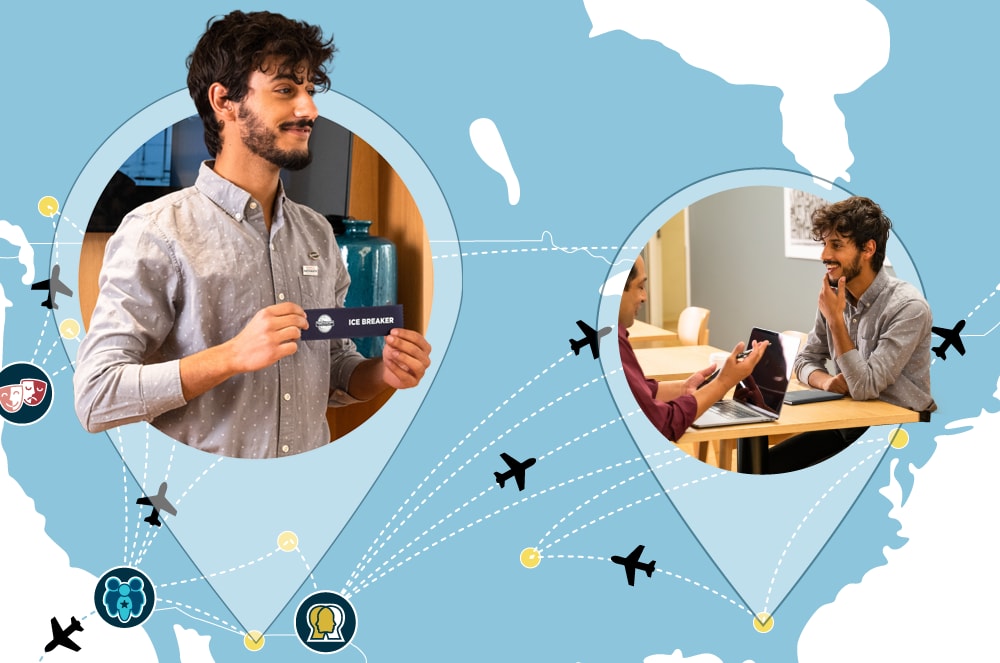
If your journey has changed course since first joining, it’s probably time to reassess your direction. Think about a small-town airport that has one flight out every day. That flight may only go to one destination, but it takes you to a major hub, with many flights going in countless directions. Every passenger is on their own journey.
This is similar to Toastmasters. You start with one path, but when you dig in, you find many different journeys to follow. And whether you want to set new goals, expand your original objectives, or need motivation to finish them, Toastmasters can help you.
Setting New Goals
Before thinking of what to do next, there is an important step to take: Congratulate yourself! Reflect on what you’ve achieved, take pride in what you’ve done, and celebrate your accomplishment. Marking milestones in your journey helps you chart your growth, and is one of the reasons why goal setting is important in Toastmasters: It’s a way to create tangible steps to get you where you want to go.
Once you accomplish a goal, or realize you need to reassess, you might be unsure of the next step. Rather than drifting, think about how you can keep growing and improving; in other words, think about what your next ultimate goal might be. Remember the old adage, “the one who aims at nothing hits it every time.”
Toastmasters is a talent incubator. It provides a laboratory and a framework to create, explore, and develop the skills, techniques, and systems that you might need to achieve success.
How can you determine and create new goals to help you achieve your next ultimate objective?
First, consider goals that take advantage of your interests and ones that create feelings you enjoy. I enjoy the challenge of the speech contests, so many of my goals build toward that.
Second, Toastmasters offers opportunities for all types of objectives. You have the opportunity to build a network, to work on speeches outside of Toastmasters, and to share your expertise with others. You can explore new topics, or start and build a specialty club around your own interests. Think about what you enjoy doing or something you would like to try and set new goals around that.
Many projects within Pathways teach you about goal setting if you need help with that. You also have other club members and their expertise, and a practice field to create your future.
Expanding Your Objectives
There are other, more specific ways you can expand your objectives to further push yourself.
If you want to continue to improve your speaking skills, you could pick a second path to work on. Or consider competing in the speech contests—a truly exciting, but challenging, way to grow.
Mentoring others is another way to grow your speaking skills because it pushes you to examine a speech at a much deeper level. It’s also a way to build your leadership skills. If you want to take mentoring seriously, look at the Toastmasters mentoring program. This is a guided program that takes a deep dive into helping members and clubs.
There are other ways to grow leadership skills. There is the Dynamic Leadership path, but even if you are already working in that path, you can set an additional goal to take on a leadership role. If you haven’t already, become a club officer.
After that, take on the role at the Area or District level. And you don’t have to jump all the way into a Director role. There are many other ways to serve at this level. If finance is your area of expertise, consider becoming your District’s Finance Manager. If Public Relations is more up your alley, consider becoming the District Public Relations Manager. There is also a slot for Administration Manager. All of these roles give you the opportunity to stretch your skills in new directions.
And if you want to take on a different type of leadership role, you can become a club coach. One of Toastmasters’ goals is to have healthy, growing clubs, but some clubs need help in this area. A club coach helps to identify the clubs’ problems and advises the leaders on what can be changed and adapted. Helping a struggling club grow stronger can be very satisfying and rewarding.
Toastmasters provides a laboratory and a framework to create, explore, and develop the skills, techniques, and systems that you might need to achieve success.
If you are the creative type and like starting a project from scratch, consider starting a new club. This could be a community club or a specialty club. You can also start a corporate club if your company does not have one already. One benefit of starting a corporate club is that, as one of the key leaders, you would have a higher visibility with your corporate managers and executives.
When Momentum Breaks Down
But what if you are having a hard time achieving your goals or don’t feel motivated to set new ones?
Analyze the reasons why. Where did your momentum break down? What would you do differently? For example, maybe you set too large of a goal and felt overwhelmed. Setting smaller milestone goals might help you stay on track.
If you are at a place where you need a new goal but are stuck, ask yourself, How am I wired? What kind of goals work for me? What excites me? Think about a past goal you achieved that you were proud of. How did it make you feel?
For example, I remember many years ago being on a backpack trip in the mountains of California. I wanted to hike to the top of a nearby peak, but halfway there, I gave up. That bothered me for eight long years. Then one summer I went back and knew I needed to try again. I started getting excited when I passed the section that intimidated me before. About an hour later, I neared the top and the exhilaration increased with every step.
As I made those final steps, I experienced something I will never forget: the entirety of Lake Tahoe, in all of its brilliant blue splendor, 2,000 feet below me. That is the feeling I want to re-create when I develop my goals.
What about you? What experience characterized your goal achievement? What excited (or scared) you? Think about that when you need some motivation to continue pursuing your goals or need a reason to set new ones.
Think back to that airport hub with many airplanes going in multiple directions. There are so many possibilities and different destinations.
Where do you want to go next? And how can you use Toastmasters to get you there?

Share this article


Bill Brown, DTM is a speech delivery coach in Gillette, Wyoming. He is a member of Energy Capital Toastmasters in Gillette. Learn more at billbrownspeechcoach.com.
 Previous Article